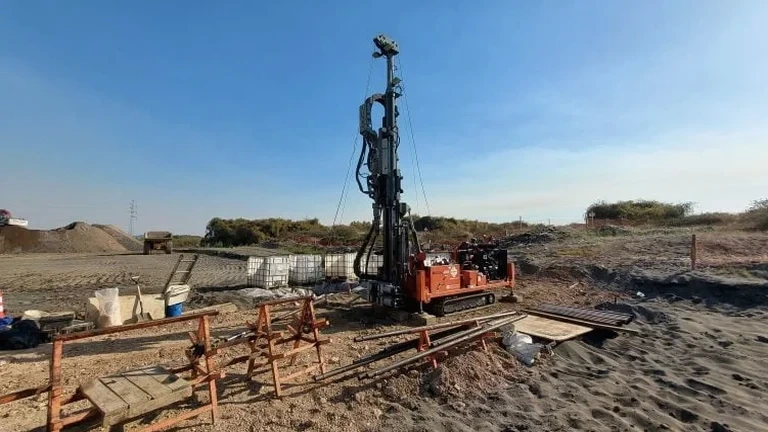
A contractor on Great Northern Road hit a pocket of saturated silt at two meters depth. The original borehole log missed it, but the excavation revealed the full picture. That is the core value of an exploratory test pit in Sault Ste Marie. You see the soil profile directly. No indirect interpretation of blow counts or cone resistance. The walls of the excavation expose layering, seepage zones, and cobble content in a way no other method can. Our field team logs the face, photographs the stratigraphy, and collects undisturbed block samples right at the contact zones. For projects near the St. Marys River or on the glaciofluvial terraces south of the city, this visual confirmation often resolves contradictions between geophysical data and borehole records. When the grain size distribution lab results come back from a test pit sample, there is zero doubt about which layer the material represents because the geologist stood in the pit and marked the boundary.
Direct observation of soil stratigraphy in an exploratory test pit eliminates the interpretation gap that exists with all indirect methods.
Quick answers
How much does an exploratory test pit cost in Sault Ste Marie?
For a standard exploratory test pit excavated to depths between 2.5 and 4.5 meters in the Sault Ste Marie area, the cost typically ranges from CA$710 to CA$980. This includes backhoe mobilization, field technician time, stratigraphic logging, photographic documentation, and in-situ density testing. The final cost depends on access constraints, number of pits required, and whether shoring is necessary for deeper excavations.
What are the depth limits for a test pit in Sault Ste Marie soils?
The practical limit with a standard backhoe is about 4.5 meters. Below that, we need shoring or a stepped excavation, which increases the footprint and cost. In the sandy soils common around the Sault Ste Marie airport area, you might reach 5 meters with a benched excavation. If the water table is high or the pit encounters running sands, the maximum stable depth drops significantly.
Do I need a test pit if I already have borehole data?
A test pit complements borehole data. Boreholes give you a continuous vertical profile at one point, but a test pit exposes a continuous horizontal face. You can see lateral variability, identify thin silt seams that control drainage, and observe the true cobble content in glacial till. For critical foundation verification, the direct visual evidence from a test pit resolves ambiguities in the borehole log.