← Home · Foundations

Shallow Foundation Design in Sault Ste. Marie: Load-Bearing Verification & NBCC Compliance

Together, we solve the challenges of tomorrow.

LEARN MORE →

Sault Ste. Marie sits at roughly 192 meters above sea level, perched on the Canadian Shield’s edge where bedrock can appear within a meter of surface or hide beneath dense glacial till. That variability drives our design approach. A strip footing on Great Northern Road encounters completely different soil than one near the St. Marys River floodplain. We start every project with a site-specific bearing capacity check, factoring in the city’s 2.4-meter frost depth requirement from the Ontario Building Code. For sites where near-surface soils are loose, we often recommend supplementing with in-situ permeability testing to confirm drainage characteristics before finalizing the footing dimensions. Our team delivers NBCC-compliant designs that account for both serviceability and ultimate limit states.

Bearing capacity in the Canadian Shield is rarely uniform—one corner of the site can be on granite while the other sits in compressible till.

How we work

The contrast between the downtown core and the newer developments east of Black Road is stark. Downtown, you often hit fractured Precambrian rock within 60 centimeters, requiring rock socketing or careful leveling of pad footings. East of Black Road, thick silty sand deposits over clay till can produce differential settlement if not analyzed properly. We use CSA A23.3 parameters for concrete design and apply bearing pressure calculations derived from on-site testing, not just textbook assumptions. Our process includes evaluating the elastic settlement under dead plus live loads, checking angular distortion between adjacent columns, and verifying the factor of safety against shear failure in the bearing stratum. A typical output includes a detailed plan showing footing widths, depths, and reinforcement schedules adapted to the specific soil profile we logged from the test pit or borehole. For complex sites we integrate findings from stone columns analysis when ground improvement is needed under spread footings.
Shallow Foundation Design in Sault Ste. Marie: Load-Bearing Verification & NBCC Compliance
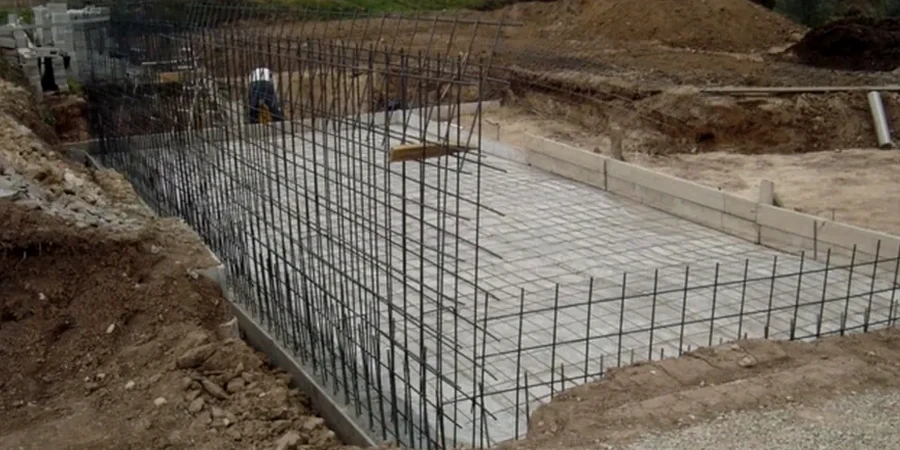
Technical reference image — Sault Ste Marie

Local considerations

Sault Ste. Marie’s freeze-thaw cycles are brutal: over 100 days per year with temperatures crossing the 0°C mark. That creates a serious frost heave risk for shallow foundations placed above the frost line. We design all exterior footings with a minimum 2.4-meter embedment, and we specify non-frost-susceptible backfill in the active zone. Spring melt saturates the upper soil layers, temporarily reducing bearing capacity just when contractors want to start work. We schedule site inspections during these critical windows to confirm subgrade conditions haven’t degraded. On sites with soft clay pockets, we run consolidation tests to predict long-term settlement and adjust footing dimensions accordingly. Overlooking these regional factors leads to cracked slabs and sticking doors within the first five years.

Need a geotechnical assessment?

Reply within 24h.

Email: info@geotechnicalengineering.vip

Technical parameters

ParameterTypical value
Design standardNBCC 2015 + CSA A23.3-14
Frost depth (Sault Ste. Marie)2.4 m minimum per OBC
Typical bearing pressure range75–250 kPa (soil-dependent)
Settlement analysisImmediate + consolidation
Minimum factor of safety (bearing)3.0 per NBCC
Common footing typesStrip, isolated pad, combined
Rock bearing verificationCore recovery + RQD assessment

Other technical services

01

Bearing Capacity & Settlement Report

Includes field investigation, lab testing of soil samples, bearing pressure recommendation per NBCC, immediate and consolidation settlement calculations, and a stamped foundation plan ready for building permit submission.

02

Frost Protection & Subgrade Verification

On-site inspection during excavation to confirm soil type matches design assumptions, verification of footing depth relative to frost line, compaction testing of granular base, and a final sign-off letter for the municipality.

Reference standards

NBCC 2015 (National Building Code of Canada), CSA A23.3-14 (Design of Concrete Structures), Ontario Building Code (OBC) – frost protection requirements, ASTM D1194 (Plate load test procedure, when applicable)

Frequently asked questions

What does shallow foundation design cost in Sault Ste. Marie?

A typical bearing capacity report and foundation plan for a single-family home or small commercial building runs between CA$2,940 and CA$3,980. The final figure depends on the number of test pits or boreholes required and the complexity of the soil profile.

How deep do footings need to be in Sault Ste. Marie?

The Ontario Building Code mandates a minimum 2.4-meter depth for exterior footings to get below the frost line. Interior footings in heated spaces can be shallower, but we always verify the bearing stratum at that depth before locking in the design.

Do I need a geotechnical investigation for a small residential addition?

Yes. The City of Sault Ste. Marie requires a stamped geotechnical report for most building permits involving new foundations. Even small additions benefit—we’ve found buried fill and organics on residential lots that would have caused problems if left undiscovered.

How do you check if the soil can handle the load?

We excavate test pits or drill boreholes to get undisturbed samples, then run lab tests for shear strength and consolidation. Using those values, we calculate the ultimate bearing capacity and apply the NBCC factor of safety of 3.0 to arrive at the allowable bearing pressure.

What’s the difference between a strip footing and a pad footing?

A strip footing runs continuously under a load-bearing wall, spreading the load along a line. A pad footing supports a single column or point load. We choose based on the structural layout and the soil’s bearing capacity at each column location.
Location and service area

We serve projects in Sault Ste Marie and surrounding areas.

View larger map