← Home · Foundations

Pile Foundation Design in Sault Ste. Marie: Deep Foundations for Complex Glacial Soils

Together, we solve the challenges of tomorrow.

LEARN MORE →

The geotechnical contrast between Sault Ste. Marie's downtown core and the outlying areas of the Canadian Shield is stark. A project near the St. Marys River waterfront encounters compressible clay and silty deposits from the post-glacial Lake Algonquin plain, requiring deep pile foundation design to bypass weak surficial layers. Less than fifteen kilometers north, bedrock outcrops of the Precambrian Shield dominate, where driven piles meet refusal early and require socketing into competent granite. This variability, shaped by the Wisconsinan glaciation, makes site-specific investigation non-negotiable. Our technical team addresses these transitions by correlating CPT test data from the river flats with borings in the Shield terrain, ensuring the pile foundation design reflects the actual stratigraphy encountered beneath Sault Ste. Marie's streets.

Socketing piles into the Precambrian Shield beneath Sault Ste. Marie requires a design approach that accounts for the weathered rock transition zone, where RQD values can swing from 30% to 90% within a single meter.

How we work

The pile foundation design process in this region relies on high-capacity hydraulic drill rigs equipped with automatic SPT hammers, deployed from our mobile laboratory units that navigate Sault Ste. Marie's varied industrial and residential zones. For the deep lacustrine clays near the Algoma Steel site, we specify large-diameter bored piles with temporary casing to prevent necking, while in the compact till over bedrock, driven H-piles or closed-end steel pipe piles provide the necessary capacity. The design methodology integrates static analysis from grain size distributions and triaxial shear strength parameters, validated against dynamic pile monitoring data. Lateral load response is a critical check here, given the sharp stiffness contrast between the soft Bayfront soils and the shallow bedrock. In areas with potential for downslope creep toward the Root River, we link the axial pile analysis with a slope stability assessment to verify the global stability of the foundation system.
Pile Foundation Design in Sault Ste. Marie: Deep Foundations for Complex Glacial Soils
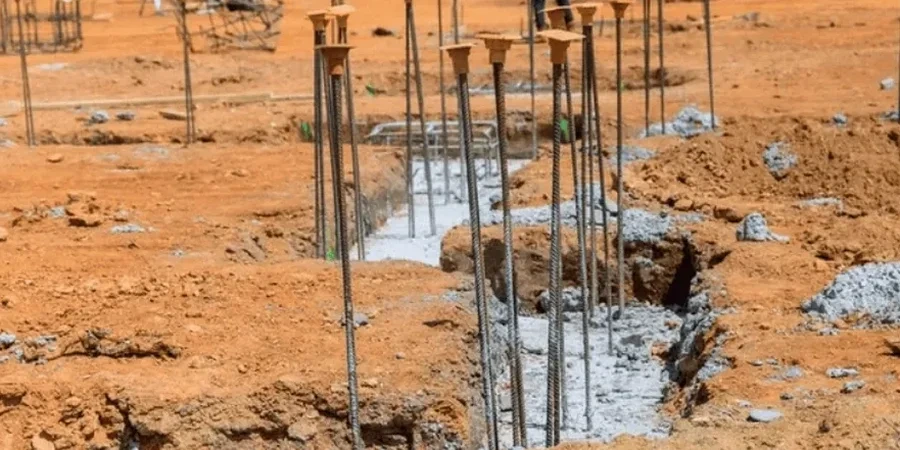
Technical reference image — Sault Ste Marie

Local considerations

The historical development of Sault Ste. Marie left a legacy of uncontrolled fill along the waterfront, where the original shoreline of the St. Marys River was extended with industrial slag, ash, and mixed debris from the early steel-making era. Pile foundation design in these zones must contend with obstructions that can deflect driven piles or collapse augered shafts. A pre-drilling investigation with methods such as test pits is essential to map the extent of this anthropogenic layer. Below the fill, the natural stratigraphy of varved clays presents a risk of negative skin friction if the surrounding ground settles relative to the pile shaft. Our designs incorporate a downdrag load analysis per the CFEM guidelines, specifying bitumen coatings or oversized casings to isolate the structural pile from the settling soil mass.

Need a geotechnical assessment?

Reply within 24h.

Email: info@geotechnicalengineering.vip

Technical parameters

ParameterTypical value
Typical pile depths (Bayfront clays)18 to 35 meters
Typical socket length (Shield bedrock)2 to 5 meters into competent rock
Design standard for concrete pilesCSA A23.3:19
Axial capacity verification methodHigh-strain dynamic testing (PDA)
Common pile types specifiedDriven H-pile, drilled shaft, helical pile
Lateral load analysisLPILE or finite element models
Seismic design categoryNBCC 2020 Site Class C or D
Allowable settlement (typical)12 to 25 mm for isolated piles

Other technical services

01

Axial Capacity Analysis

Static and dynamic analysis methods for driven and drilled piles, calibrated with site-specific soil parameters from SPT and laboratory testing to determine ultimate and allowable capacities.

02

Lateral Load and Deflection Design

P-y curve analysis using LPILE to model pile behavior under wind and seismic loads, critical for structures on the soft Bayfront clays where lateral stiffness governs the design.

03

Pile Load Testing and Monitoring

High-strain dynamic testing (PDA) and CAPWAP analysis during driving, plus static load tests with telltale instrumentation to verify design assumptions and confirm shaft and base resistance distribution.

04

Rock Socket Design

Detailed assessment of socket shear resistance and end bearing in the Precambrian Shield, using core logging data and pressuremeter tests to optimize socket length and diameter.

Reference standards

NBCC 2020 (National Building Code of Canada), CSA A23.3:19 (Design of Concrete Structures), CFEM (Canadian Foundation Engineering Manual, 4th Edition), ASTM D1143 (Standard Test Methods for Deep Foundation Elements Under Static Axial Compressive Load)

Frequently asked questions

What is the typical cost range for a pile foundation design report in Sault Ste. Marie?

For a standard residential or light commercial project in Sault Ste. Marie, a pile foundation design package, including the geotechnical report and pile specifications, typically ranges from CA$2,370 to CA$7,580, depending on the number of piles and the complexity of the soil conditions.

How does the NBCC 2020 seismic hazard affect pile design in this region?

Sault Ste. Marie falls within a moderate seismic hazard zone under NBCC 2020. The design must account for site class amplification, particularly on deep clay sites (Class D or E), which can increase spectral accelerations. Liquefaction potential is assessed for loose saturated sands, though the dense glacial tills common here are generally non-liquefiable.

What pile type works best in the soft Bayfront clays?

For the compressible clays near the St. Marys River, drilled shafts with steel casing or driven closed-end steel pipe piles are preferred. These pile types can penetrate the soft layer and achieve capacity in the underlying dense till or bedrock without the excessive settlement associated with shallow footings.

Do you provide pile integrity testing after installation?

Yes, we perform low-strain pile integrity testing (PIT) using the sonic echo method to screen for defects such as necking, bulging, or voids in cast-in-place piles. For critical structures, cross-hole sonic logging (CSL) provides a more detailed tomographic image of the pile shaft concrete.

How do you address negative skin friction in Sault Ste. Marie's fill zones?

In areas with deep uncontrolled fill, we calculate the downdrag load using the CFEM methodology, considering the consolidation settlement of the surrounding soil. Mitigation measures include applying a bitumen slip layer to the upper pile shaft or using a double-casing system to physically decouple the pile from the settling ground.
Location and service area

We serve projects in Sault Ste Marie and surrounding areas.

View larger map